One Those Who Left and Those Who Stayed
Those of us who left are often accused of being unfairly didactic, even condescending, toward those who had to remain in Russia and continue living within its present reality.

Over these years, I have come across hundreds, if not thousands, of social-media posts, short videos, and entire segments offering advice, issuing appeals, and sometimes making accusations. And they have always left me with the same sense of sadness. Because there has always been one difficult and painful answer to all these messages, posts, videos, and exhortations: not everyone had the opportunity to leave; not everyone had the strength; not everyone was able to take the risk and make that step.
These things may seem obvious. And more than that, not everyone who stayed had ever intended to leave in the first place. I am not speaking here about those who made their peace with this reality or, at the very least, chose the position of “it is none of my concern.” I mean those who were shocked and deeply outraged by the crimes of the regime — people who understood, no less clearly than those of us who escaped, that a deranged government had openly and finally crossed every conceivable line.
Some of them refused to remain silent and spoke out openly. Some are still bearing the burden of imprisonment and persecution at the hands of a system that has turned justice into its opposite, while somehow finding the strength and extraordinary courage to hold on to their convictions in the very jaws of the dragon. And yet, not everyone who opposes the lawlessness taking place today is behind bars or under the constant scrutiny of the authorities — although it has become increasingly difficult to hold a dissenting view without attracting that scrutiny.
One does not have to be in prison, or carry the burden of exile, in order to oppose evil and remain in possession of one’s reason and one’s conscience. I do not think this is some great revelation. It is a very simple truth — a truth about the reality in which we now live.
Why am I writing about things that ought to be so obvious? Because I have repeatedly seen conflicts and ruptures arise between people who, for many years, were not merely friends but kindred spirits. These were people who wanted to live and build their lives together in a free country, in humane conditions. People who wanted this generation and those that follow to grow up not inside the illusion of some mythical sacred city, besieged on every side by enemies plotting against its “greatness,” but in a world of discovery and possibility, diversity and choice.
What happened did not, in itself, divide these people into those who made the right choice and those who made the wrong one. It should never have become a wall between them. And it is deeply painful that, somewhere along the way, such a division was imposed upon us. Because from there we begin, little by little, to arrive at something frighteningly close to the words from the parable of the rich man and Lazarus: that “none may cross from here to you.”
Is that really where we are going? Is that what we want?
Then we must also acknowledge that this is precisely what the regime wants. And it is what the devil wants as well. Wherever division takes root, there is fertile ground for him.
I have watched people — not indifferent people, but people for whom everything that happened came as a devastating blow — encounter the arrogance of the “right side,” the self-proclaimed side of light, and eventually turn toward things that had once been entirely alien to them. Because it became unbearable to find themselves caught between the hammer and the anvil. Because one cannot simply be ordered to step up to a podium, deliver the correct speech, and proclaim before the whole world one’s correct ideals.
I am exaggerating, of course. But I have seen this loneliness, this hurt, this pain. It is as though someone standing safely behind the fence is shouting to you: turn around and punch the wolf that is chasing you — while you no longer have the strength even to drag your feet forward. And now you are no longer welcome behind that fence either — or perhaps you are welcome only upon presentation of the proper papers.
Yet to turn back means almost certain destruction.
What, then, is a person supposed to do?
The truth is that we no longer know much about that reality. Only a few years ago it was still very different; now it lives by its own terrible laws, with all their particular horrors and nuances. We do not know what it is like to be consumed by the desire not merely to speak, but to cry out — while knowing that, at that very moment, dozens of snapping jaws are already poised at your throat.
Do we truly understand this?
And one more thing. Do we understand now that the only true source of light in our present life can come from the Gospel?
If we do, then there is no abyss across which a word of hope, compassion, and mercy cannot be stretched — even if only like the thinnest thread. A word of life. A word of love. There is no place from which a person cannot one day rise and make their way toward God.
And more than that: we should not imagine that God is absent now from those places, or from those people who must walk through a reality clattering with iron and hatred. If we fail to understand this, the Shepherd will still go after the sheep that is, at this moment, outside the safety of the fold.
So perhaps, in the midst of this storm, we too should quietly begin lighting candles and standing by the window, even if the light we have to offer is not very bright. Beyond the glass there may be thick, clinging darkness, wind, and driving rain. But someone may see that light. And perhaps they will find the strength to kindle a light within their own heart as well.
Does it really matter on which shore of these troubled seas we now find ourselves, if we can still answer light with light?
Let us pray for one another.
The longed-for shores of our quiet joy do not begin after years spent crossing the sea.
They open within the heart.
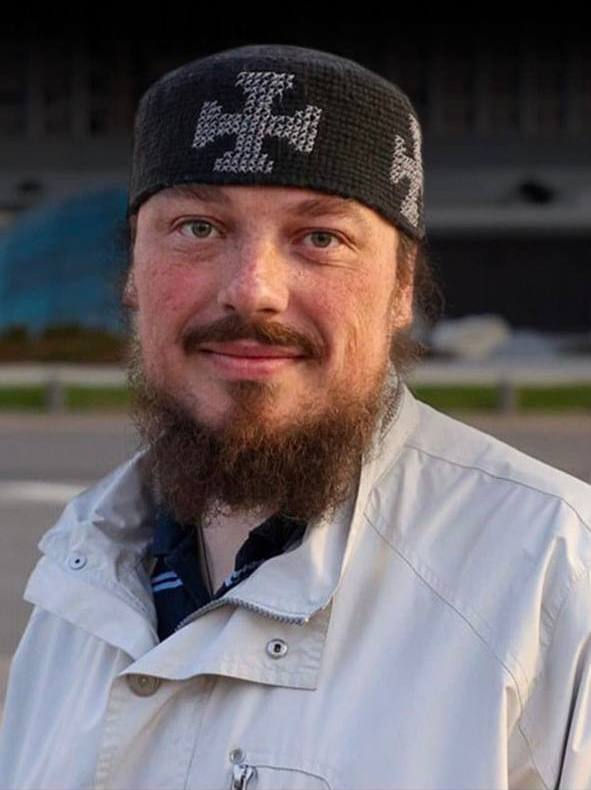
Priest Andrey Mizyuk, former cleric of the Church of St. Seraphim of Sarov in Saratov

Comments